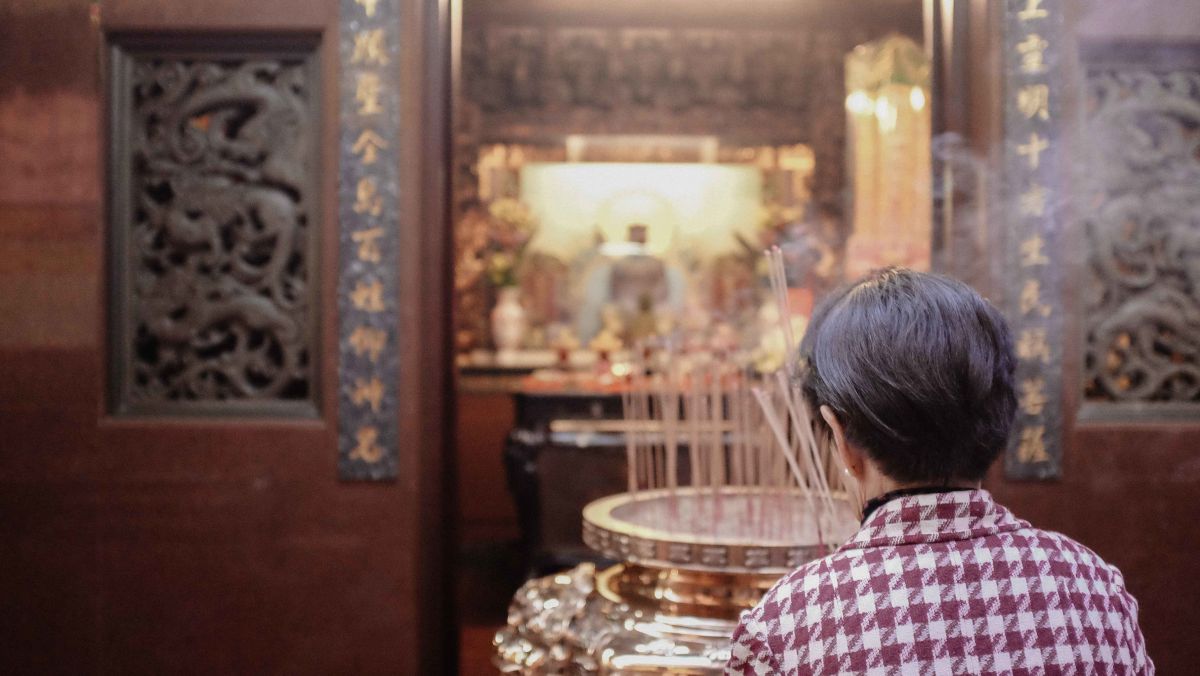
Songshan Ciyou Temple
Place of worship · Ciyou ·

Songshan Ciyou Temple

Place of worship · Ciyou ·

18th-century temple dedicated to Mazu, adjacent to Raohe Market

Songshan Ciyou Temple by

Information

No. 761號, Section 4, Bade Rd, Songshan District, Taipei City, Taiwan 105 Get directions

Information

Static Map

No. 761號, Section 4, Bade Rd, Songshan District, Taipei City, Taiwan 105 Get directions

+886 2 2766 3012
ssjyg.org.tw
SSJYG

Features

restroom
wheelchair accessible entrance
wheelchair accessible parking lot

Last updated

Dec 11, 2025

Powered By

You might also like

Terms of Use • Privacy Policy • Cookie Policy
 © 2025 Postcard Technologies, Inc.
@onthegrid
18,031 Postcards · 834 Cities

On the Grid : 慈祐宮 Ciyou Temple

"Anyone who arrive at the entrance of Raohe Night Market will hardly take a glance at the exquisite facade of Ciyou Temple and stop to take a picture. The temple was constructed in 1753 and dedicated to the Mazu, a local sea goodness. The main shrine room is often full of people praying and performing religious rituals." - Lin Yuhuan

https://onthegrid.city/taipei/songshan-district/ciyou-temple-%E6%85%88%E7%A5%90%E5%AE%AE
Songshan Ciyou Temple
@onthegrid
18,031 Postcards · 834 Cities

"慈祐宮 Ciyou Temple, Songshan District by Lin Yuhuan . Anyone who arrive at the entrance of Raohe Night Market willhardlytake a glance at the exquisite facade of Ciyou Temple and stop to take a picture. The temple was constructed in 1753 and dedicated to the Mazu, a local sea goodness. The main shrine room is often full of people praying and performing religious rituals."

Taipei
Songshan Ciyou Temple
@eater
391,113 Postcards · 10,988 Cities

Raohe Is the Single Best Taipei Night Market for Travelers | Eater

"A striking traditional temple with deep historical roots that sits adjacent to a major night market; its presence reflects the common postwar pattern of markets sprouting up around temples and intersections and contributes to the area's cultural and historical ambiance." - Chris Horton

https://www.eater.com/2019/3/6/18240098/raohe-night-market-taipei-best-dishes
Songshan Ciyou Temple

Monica E.

Google
The temple is located right next to Raohe Market and is a must-visit stop that truly opens up the full Taiwan experience. If you’re lucky, you might witness a worship ceremony like me. The temple doors are open to everyone, always encouraging respect from visitors. There are restrooms available — most are clean, with both squat-style and Western-style toilets, though the latter are fewer. The temple is colorful, with multiple floors and many deities. The floral decorations are vibrant and eye-catching, and there’s always incense burning and people offering prayers throughout the day. The architecture is breathtaking with all those details and design. Although it’s a beautiful temple, it’s not the most impressive one in Taipei.

George F.

Google
Primary Deity: The temple is dedicated to Mazu, the Goddess of the Sea, who is revered for protecting sailors and fishermen. It is also home to a pantheon of other deities, including the Earth God (Fude Zhengshen) and the Goddess of Birth (Zhusheng Niangniang). Founding: According to legend, the temple's establishment began when a wandering monk carrying a gilded image of Mazu found a group of fellow Mazu devotees in the area, which was then known as Xikou (a busy riverside trading port). Construction: Together, they spent ten years raising funds, and construction began in 1753 and was completed in 1757 during the Qing Dynasty. Architecture: The current structure is an expansive, ornate six-story temple, featuring intricate traditional Chinese architecture with vibrant carvings, especially on its richly decorated roof. The roof ridge is adorned with ceramic dragons and mythical creatures, including two dragons facing three immortals symbolizing wealth, happiness, and longevity. The stone lions guarding the main entrance were carved in 1803. Cultural Significance: As a major center of faith in eastern Taipei, the temple plays a vital role in the local community, hosting annual celebrations, most notably for Mazu's birthday (the 23rd day of the third lunar month), which involves elaborate processions and ceremonies. Visited the temple while going to the next door night market, packed with tourists while I was there.

The Nomadic I.

Google
This is a prominent Taiwanese folk temple, built in the 18th century, dedicated to the sea goddess Mazu. And it's right next to Raohe Night Market. We were blessed with a Daoist procession along with a "sweet dew from the heavens" - romantic way of saying rain in Chinese. These parades are always interesting.

M Z

Google
Definitely worth a visit. Beautiful temple. Close to Raohe Night Market too.

RTanya

Google
I love this temple for its detail and beautiful very well maintained ornaments! I could feel the history and stories from the past!

Life's A.

Google
Rather spectacular temple with multiple levels and plenty of intricate decorations. Whilst being a place of worship, it also has a pleasant atmosphere. Worth visiting at night with a trip to the Raohe Markets.

Eliza T.

Google
Huge Mazu temple next to the busy Raohe Night Market. Will always come here for prayers whenever I am in Taipei.

Anna K.

Google
Ciyou Temple is dedicated to Mazu, the sea goddess revered for protecting sailors and fishermen. The temple was originally founded in 1753 by a wandering monk carrying a gilded statue of Mazu. Together with local devotees, he spent ten years raising funds to build the temple, which was completed in 1757. At the time, the area—then known as Xikou—was a busy riverside trading port. Ciyou Temple is architecturally striking, featuring a six-tiered structure with a richly decorated roof adorned with ceramic dragons and mythical creatures. At the roof’s ridge, two dragons face three immortals symbolizing wealth, happiness, and longevity. At the main entrance, a pair of unique stone lions carved in 1803—a male with an open mouth and a female with a closed mouth—guard the temple. The central deity is Black-faced Mazu, enshrined on the main altar. Side altars are dedicated to other deities, including Fude Zhengshen (the Earth God) and Zhusheng Niangniang, the goddess of childbirth, who is accompanied by thirteen divine helpers, such as Duyu Niang, a deified midwife known for her selflessness.