Adrian S.
Google
Entertaining Mr Sloane — Young Vic, October - 8th November 2025.
I was always going to see this. Couldn’t not, really—it felt like fate. Entertaining Mr Sloane has been knocking about in my head for a long time, years infact. I first got introduced to Joe Orton’s work in the sixth form while doing my A-levels, and it was the first play I ever worked on at drama school, all the way back in the,- in the 90’s !!
Seeing it again now— 3 ? decades on, in Nadia Fall’s sharp revival at the Young Vic—was like bumping into an old mate who’s gone darker, funnier, and a whole lot more unsettling with age. I found myself trying to, well – remember ! - fumbling through the memory like, “I know you from somewhere... where’s it been again?”—just like Kemp in the play, trying to locate that hazy connection that’s stuck somewhere in the past.
Then boom, it stabbed me like a fork in the leg. This detailed piece —a play where charm curls into cruelty, and politeness is just a mask for perversion.
The play’s sheer masterclass in manipulation and humour, the way good manners just cover up something, - something a bit, absolutely feral. ( for want of another word).
Orton’s characters might be from the 1960 time capsule, but their greed, their evasions, and their excuses for themselves feel, - well, feel current.
Nadia’s direction leans right into both the comedy and the decay, reminding you why Orton’s stuff has always had a bite to it for anyone who dared to look.
Nowhere to Hide
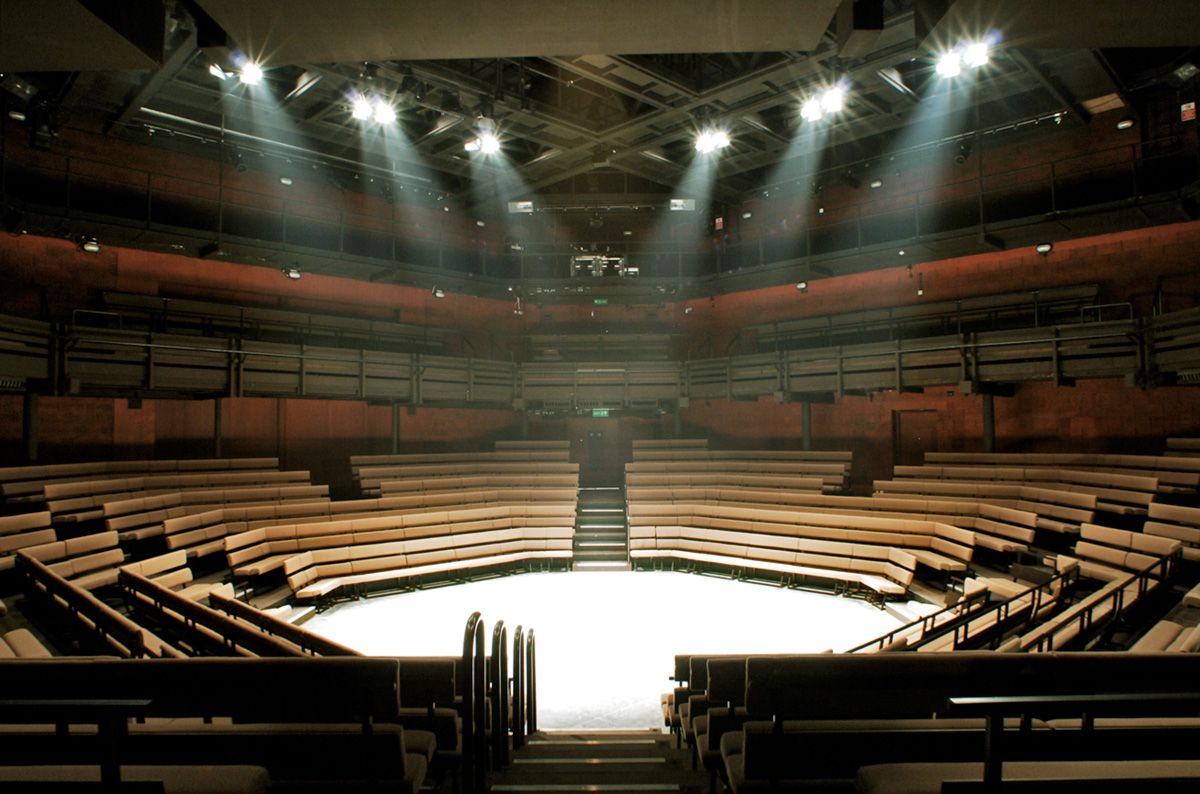
The staging in the round is what really changes it. With the audience encircling the action, there’s absolutely nowhere for the characters to hide—every lie, every flicker of lust or malice, is laid bare right there under the shared glare, the shared experience ! Sit with the uncomfortable. “Sit down dear, make yourself comfortable.”
But the exposure works both ways. We, the audience, are dragged in too, made utterly, well - complicit. You’re looking right through the person opposite to watch the cruelty unfold in the centre, becoming guilty spectators to Sloane’s scheme, the household’s rot, and eventually, to the quiet horror of his end.
Up above, the suspended trauma charred furniture just seems to watch silently, its old and frayed edges bearing witness to this repeating human loop—betrayal, desire, violence—as if it’s seen the whole cycle countless times before. The design traps everyone—actors, audience, and old furniture alike—in a single suffocating room where politeness is just a performance and cruelty is shared.
Then there’s the lighting, visceral, unforgettable. Strobe flashes punch through key moments like a flashlight going off, freezing gestures and expressions in fragmented snatches. The effect is hypnotic: each pulse seems to time-stamp the violence right into your mind, printing it there for later. It makes you think of our modern obsession with catching moments on our phones, a flash illuminating the scene for self-examination later on. Hours later, you can still see the images when you blink—Sloane’s face, Kath’s hands, the shock of the “stop motion” arrested mid-air. The slow-motion quality of the strobe turns the theatre into an echo of memory, making sure what you witness isn’t easily shrugged off.
The humour starts out deceptively light, then gradually shifts into something else—the laughter becoming uneasy as you sense the manipulation getting deeper. The performances absolutely thrive on the tonal shift . Kath’s mix of motherliness and pure lust is uncomfortable yet horribly human; she doesn’t want to endure the long loneliness anymore, Ed’s smug moral superiority is just a flimsy cover for his own urges. And Sloane—hanging between victim and – well villain is the word.
The suspended charcoal grey charred furniture above and around seems to twist and strain in mid-air, echoing the tangled, uncomfortable entanglements of the characters below—their desires, fears, and cruelties squashed together in this tiny, choking space.