Mioma P.
Google
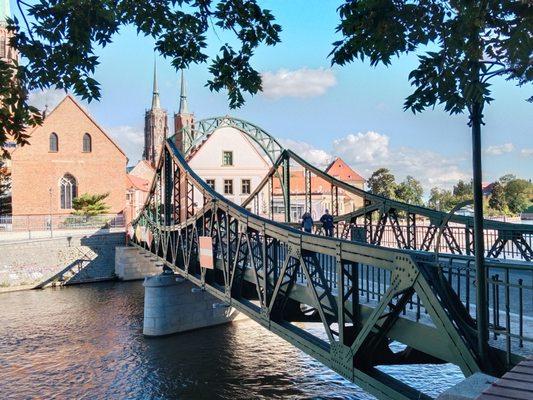
For me, crossing Most Tumski isn't just about getting from one bank to the next. It’s a ritual, a deliberate passage from the city's worldly bustle into its ancient, spiritual heart. They call it the "Bridge of Love," weighed down by thousands of padlocks, but its older, truer name is Cathedral Bridge, and you feel that history in every step.
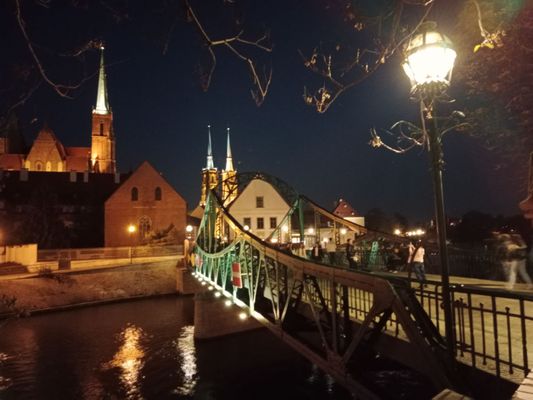
The bridge itself is unassuming—a simple, iron structure from 1889, replacing older wooden ones. But its location is everything. It spans the branch of the Oder that separates Ostrów Tumski—Cathedral Island, the oldest part of Wrocław—from the rest of the city. For centuries, this was a literal and symbolic threshold. Legend says the medieval bridge guards would close its gates at night, and you'd need a good reason to enter the clerical district after dark.
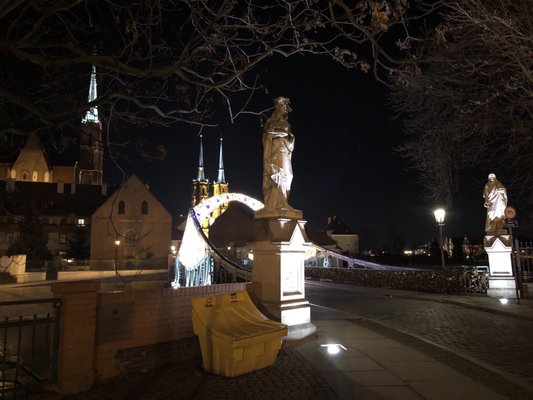
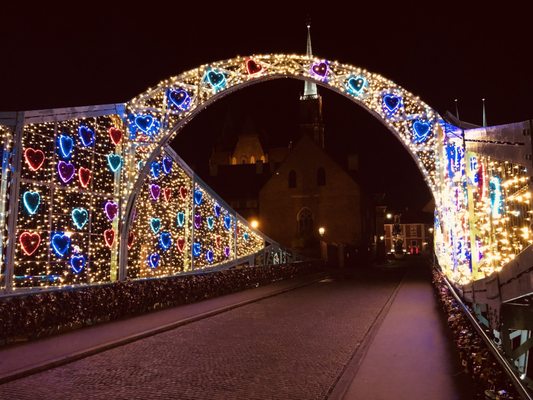
As I walk onto it, the modern city seems to fade. The air changes. My focus is drawn down the cobbled lane to the twin spires of the cathedral, but first, I always look down. The railings are a rusting tapestry of locks, each one a whispered promise from decades past. It’s a relatively new tradition, but it speaks to the bridge’s enduring role as a place of passage and commitment.
And then there are the figures. Ten of them. The gas lamps. These aren't ordinary streetlights; they are graceful, green-patinaed sentinels from 1892, and a lamplighter still comes every dusk to light them by hand. Watching the warm, flickering glow illuminate the old stones and the lovers' locks as darkness falls over the Oder is one of the city's most magical moments. It’s a living piece of history, a daily ceremony that defies time.
So, I don't just cross. I pause in the middle. I look at the locks, I touch the cold, ornate iron of a lamp post, and I gaze at the cathedral ahead. This bridge is a timeline—medieval foundations, 19th-century ironwork, 20th-century war scars (it was blown up in 1945 and faithfully rebuilt), and 21st-century tokens of love. It’s a bridge between eras as much as between riverbanks. To cross it slowly is to feel the layered soul of Wrocław, moving from the present into a timeless, quiet island of history.