Halo Paris
Restaurant · Bonne-Nouvelle ·
Fashion, art, design, and food hub with Basque-inspired dishes

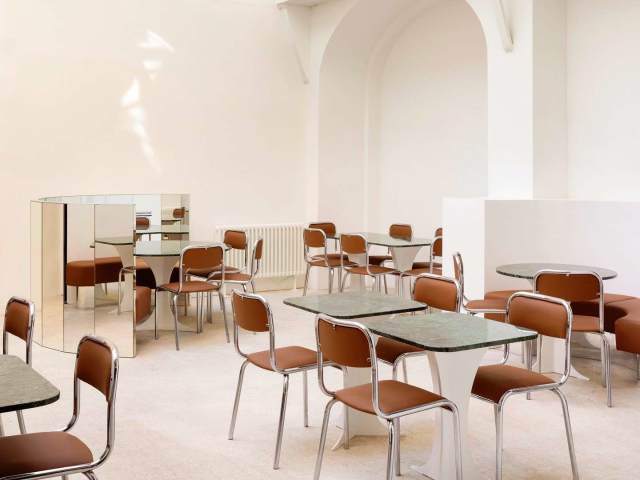


Fashion, art, design, and food hub with Basque-inspired dishes
"This restaurant is tucked away at the back of a fashion and design concept store showcasing young designers. Behind the wooden door, light flows through the glass roof into a space with an open kitchen and a bare concrete floor. A veritable cultural hub, the basement includes a small exhibition room, a cocktail bar and a table d'hôte. In the kitchen, chef Victor Blanchet (who was a contestant on French TV's Top Chef in 2023 and has also worked at L'Arpège and Neso) is inspired by the Mediterranean and the Basque Country – serving dishes that are colourful, light and well composed, such as sea bass tataki flambéed with pastis, beetroot mousseline and preserved lemon. Online bookings only." - Michelin Inspector
"Paris has been trying to make restaurant-boutique hybrids work without much success. But Halo, which is a shop highlighting young fashion designers, an art gallery, and a design-y bistro, might be the one that sticks. You can lunch with a prix fixe menu, but dinner delivers a more lively experience. Whenever you come, you’ll enter through the boutique and pass through a changing room to get to one of the slick green marble tabletops set up beneath a skylight. The vibe veers a bit futuristic when the sunlight dims and you dig into beautifully plated, knockout shareable dishes inspired by Basque and Provençal cuisine, like the ravioli stuffed with Basque chistorra, brousse cheese, and espelette pepper. Halos of orange, red, and yellow light are projected onto dining room walls as staff in slouchy, faded jeans and vintage tees swerve around tables serving creative, low-alcohol cocktails. " - sara lieberman, lindsey tramuta

"Paris has been trying to make restaurant-boutique hybrids work without much success. But Halo, which is a shop highlighting young fashion designers, an art gallery, and a design-y bistro, might be the one that sticks. You can lunch with a prix fixe menu, but dinner delivers a more lively experience. Whenever you come, you’ll enter through the boutique and pass through a changing room to get to one of the slick green marble tabletops set up beneath a skylight. The vibe veers a bit futuristic when the sunlight dims and you dig into beautifully plated, knockout shareable dishes inspired by Basque and Provençal cuisine, like the ravioli stuffed with Basque chistorra, brousse cheese, and espelette pepper. Halos of orange, red, and yellow light are projected onto dining room walls as staff in slouchy, faded jeans and vintage tees swerve around tables serving creative, low-alcohol cocktails." - Lindsey Tramuta
"Tucked on a quiet side street in the Sentier neighborhood of Paris’s 2nd arrondissement, this hybrid boutique-and-restaurant occupies a 1750 building that once housed the upscale Hôtel Osmond brothel, the Vatican and a leather atelier. Opened by Victor Goyeneix and Matthieu Nicolaï in 2023, the chic space hosts a rotating roster of young designers — photographers shooting models, a designer at a sewing machine — and leads through a pistachio-green carpet and dressing rooms to a dining room under a glass roof, with stairs down to a club and private dining room. The back half is a fully fledged restaurant led by chef Victor Blanchet, who trained at L’Arpège and Neso and appeared on French Top Chef; he serves seafood-centric, French Mediterranean and Basque–tinged dishes finished with purple flowers and grilled herbs amid brown leather banquettes and deep-green Guatemala marble. The operation is intentionally integrated rather than a tacked-on concept, trading on creative cross-pollination between fashion and food to attract tastemakers while keeping serious cooking at its heart." - Rooksana Hossenally
Carlie I.
Justine
Myra L.
Sapolachet R
Alexis S.
Alicia K.
Oleksandr H.
Milagros L.


