The Gourmet Cobbler Factory
Bakery · West Central ·
Southern-style cobblers and pies made with local fruit
















Southern-style cobblers and pies made with local fruit
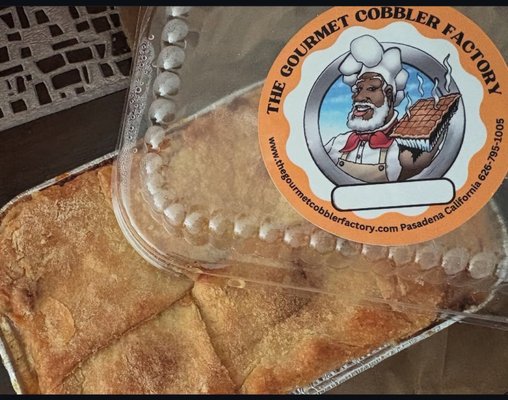
"This family operated Pasadena institution does two things very well: pies and cobblers. Both are made with locally grown fruit and the cobblers come in a range of sizes, from single servings to trays large enough to feed a village with peach, apple, cherry, lemon meringue, and mixed berry fillings. Go straight to the Gourmet Cobbler Factory to place an order or give them a call. Act early, as they’ve been selling out of their inventory in recent weeks." - Mona Holmes
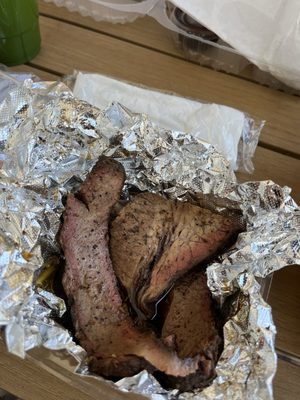
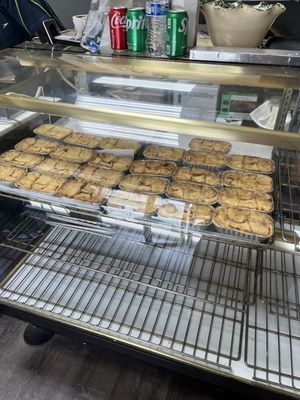
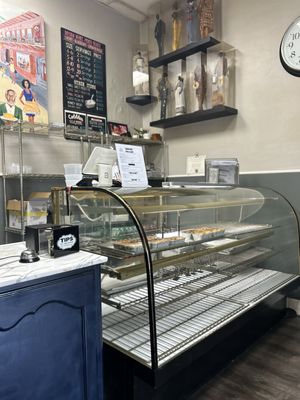
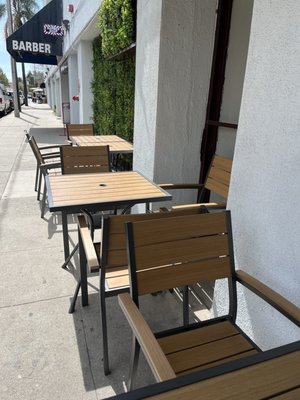
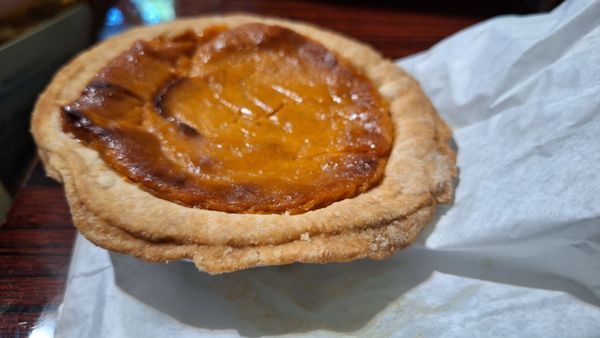
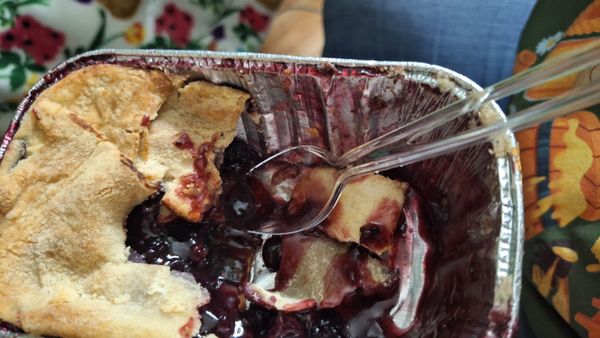
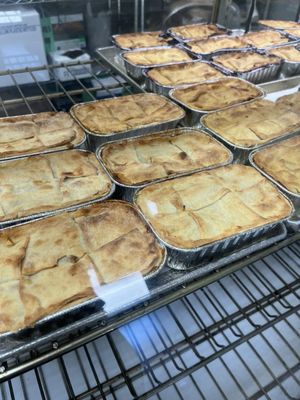
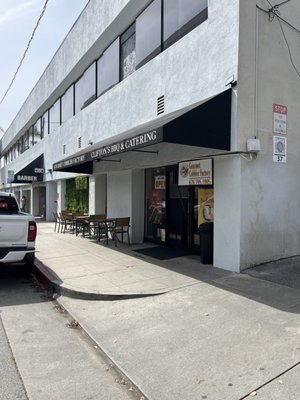
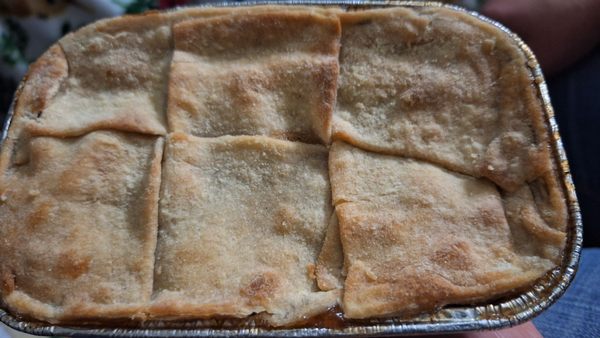
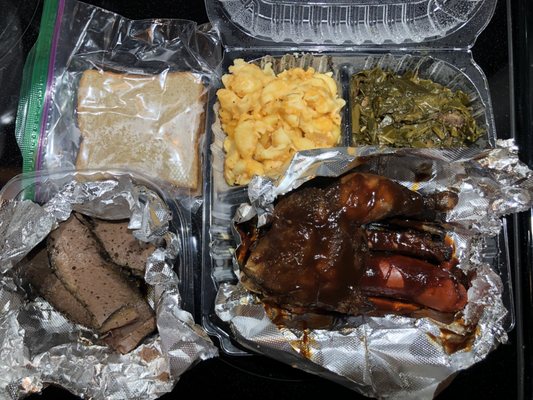
"On a quiet Sunday morning on Catalina Avenue the sweet smell of fresh cobbler floats out from the door as an 81-year-old patriarch, his 79-year-old wife, and their 53-year-old daughter pull pans of cherry, peach, mixed berry, and apple cobbler out of the oven. Since taking over in 2002 the family-run bakery has become an institution in the neighborhood, known for its namesake dish served a la mode or on its own; alongside the cobblers the shop also offers mouthwatering pies, barbecue plates and sandwiches, and a daily seafood gumbo. Flames from the recent Eaton Fire didn’t get down to this part of Pasadena, but smoke and ash blanketed the area and filtered through the front and back doors, prompting the Powells to close for a few days for a deep clean; after reopening regulars came back in a steady stream to place or pick up orders — “We have a lot of customers from there, and they still come in,” Clifton says, “But you would be amazed at how many of our customers lost their homes.” Clifton, who grew up in Mississippi and New Orleans, learned the family cobbler recipe from his sister: “I’d go down there and visit [my sister], and we’d eat cobbler and drink whiskey,” Clifton says. “She would always make a cobbler for me.” The business operates in the Regency Academy Cinemas building that first opened in 1925 as Bard’s Egyptian Theatre, on a block dotted with tailors and barber shops (one open since 1926) and a former Wurlitzer store now housing Artisanal Goods by Car; the previous occupant of this space (dating to 1978) had the same name, and when the Powells took over Clifton added “gourmet” in 2002 because he thought his cobblers warranted the distinction. Inside, a bell jingles as customers enter and are greeted by a large display case full of cobblers and pies (including pecan and sweet potato), a small counter and doorway into the kitchen, and two menu boards listing cobbler prices, the daily seafood gumbo, and pie slices; a large painting of a procession down Bourbon Street features Clifton and Sherice holding cobblers (Gloria appears as an eatery called Gloria’s Glorious Southern Cuisine) and the family’s grandchildren, while figurines made by Gloria and her cousin that connect to African culture and the African diaspora stand in glass boxes as a deliberate signal of pride in ancestry and community. “The cobbler is a Southern treat, born from the tradition of ‘making the best of what we had,’” Sherice says; Clifton notes the difference between pie and cobbler — “a pie is denser than the cobbler, and one can cut into a slice of pie; cobbler is filled with juices of the fruit and can’t be cut into, though it is dippable.” Preparation combines careful technique and year-round sourcing: “A cobbler can cook in about 20 minutes, but we have to prep it for the cooking stage,” Gloria says — the dough is rolled out, a crust placed in the bottom of the pan, then the fruit (ripe but frozen and packed to retain taste year-round from a supplier in Los Angeles) is added, the top is applied as a double crust with wide strips laced on top to give the appearance of squares weaving in and out. “I could get whole berries out of a box and throw them in my mouth and eat them sometimes; they’re so fresh,” Clifton says. Cobblers and pies come in different sizes (the most popular cobbler is 8 by 10 inches; four-by-six pans sell frequently) and are brought to birthday parties, weddings, and funerals; locals, out-of-towners, and regulars alike come in, and family lore holds that many new customers are drawn in simply by catching the baking smell as they pass by. Barbecue was added to the menu about seven or eight years ago after Clifton did it at farmers’ markets; he smokes ribs, chicken, brisket, and hot links in a big smoker in the back, and the chicken — “juicy and smothered in a thick sauce” — falls off the bone; a dinner order comes with two sides (such as collard greens and macaroni and cheese) plus a slice of bread to sop up the tangy, spicy barbecue sauce. Throughout the day laughter rings out as Gloria hands customers bags loaded with lunch or dinner and dessert, some patrons sit at the four small sidewalk tables, and children press their faces to the glass — a toddler’s repeated, delighted cry of “Peach! Peach! Peach!” captures the atmosphere. The extended family pitches in during the holiday rush and plans to expand operations, hire employees, and eventually ship cobblers; having survived the Great Recession, the COVID-19 pandemic, and the 2025 Los Angeles wildfires, the shop remains committed to fostering a welcoming space where people can feel at home with homemade food — “There’s nothing like it,” Sherice adds." - Alice Wynne
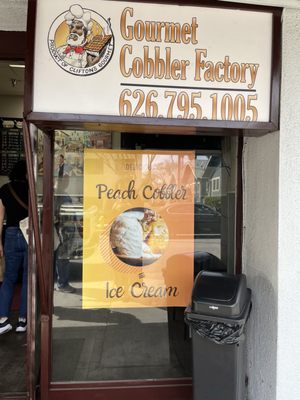
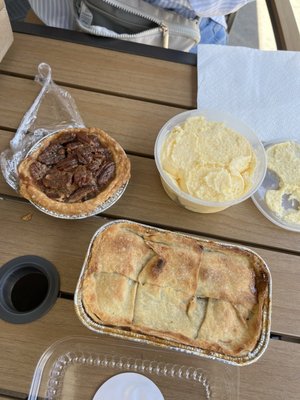
"A family-run bakery from the Powells, longtime Altadena and Pasadena residents, baking cobblers and mini pies all day; it's common for goods to sell out by the end of the day. The peach cobbler's crust was sturdy enough to "withhold its fruit filling, even under the weight of melted ice cream" (the reviewer "took a phone call, only to return to a melted messy delight"). The cobbler is delightfully sweetened with honey and serves as a reminder that family businesses are the best kind of businesses, especially when the cobbler is this satisfying. — Mona Holmes, editor, Eater, Southern California/Southwest" - Eater Staff
"This Pasadena institution does two things very well: pies and cobblers. The two are made with locally grown fruit and the cobblers come in a range of sizes, from single servings to trays large enough to feed a village, with fillings like peach, apple, cherry, lemon meringue, and mixed berry." - Mona Holmes
Alex D.
Leondra G.
David A.
Betsy S.
Jacqueline L.
Jan-Mitchell Z.
Patricia M.
M S (.

Ann S.

Danni-Sunni S.

Claudia B.

Rocio C.

Juan F.

Jacqueline L.

Al C.

Chelsea A.

Anne-Marie T.

Lauren A.

Diane D.

Ashley R.

Lil M.

Tony S.

Seb F.

M S.

Ysidro S.

Dezi A.

Trent D.
Chris A.

gail k.

Victoria W.
Dawnalee H.

Jacky H.

Nina R.
Melinda M.

Dawn F.
Estellaleigh F.

Sonjay H.

Kendra P.

Natalie C.

Candace M.

Stephanie C.

Dean K.

Aftin J.

Dave H.
Mary P.

Lourdes R.

Rene B.

Ryan S.
Joe C.

Elizabeth L.
Jayleen C.

Natalie B.

Michael C.

Ana F.
John C.

Kevin X.

Tracee W.
