6
Musaafer

New NYC Indian Restaurant Musaafer Opens From Texas | Eater NY
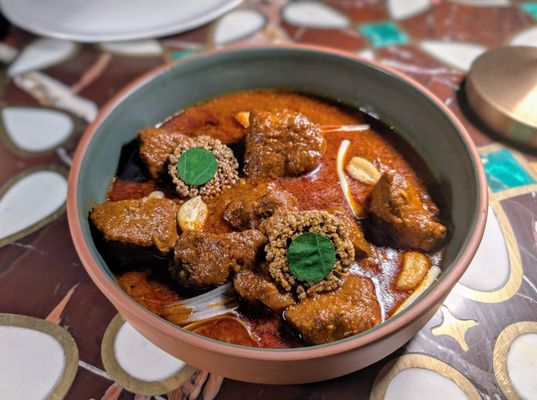
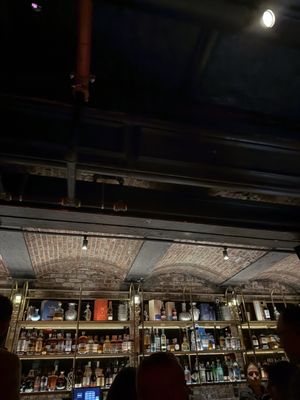
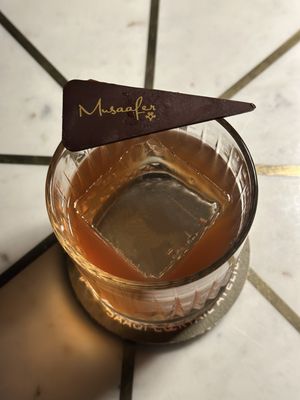
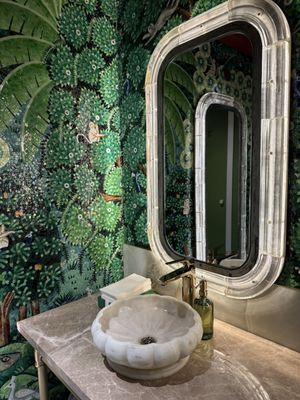
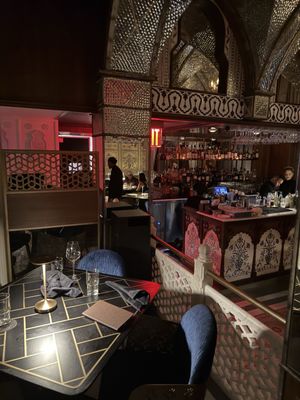
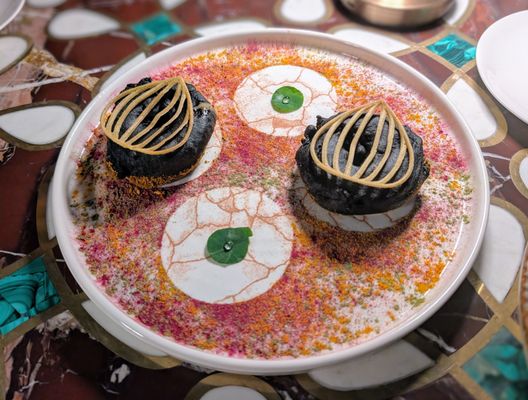
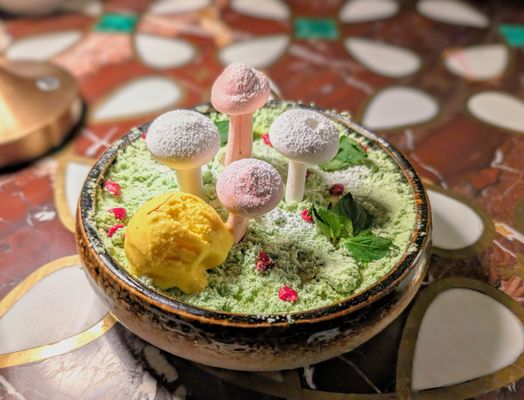
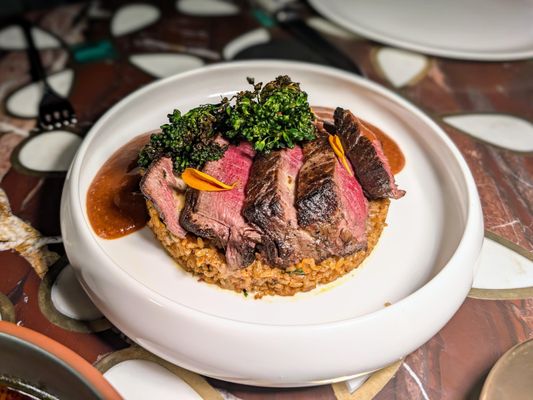
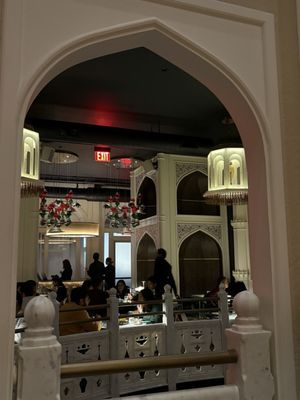
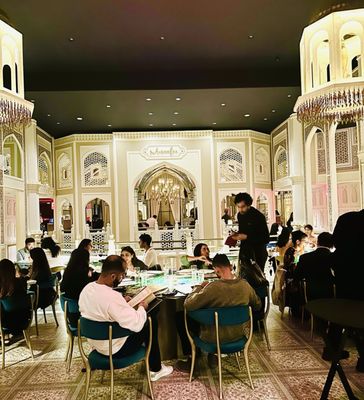
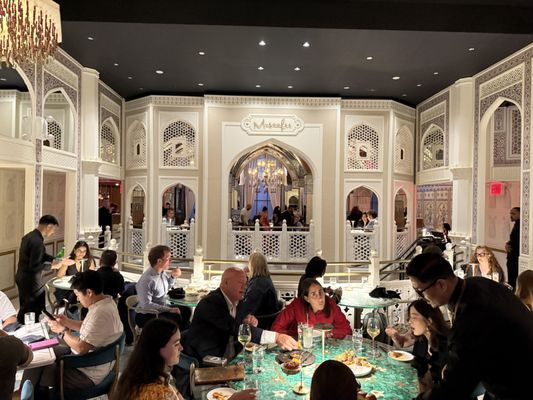
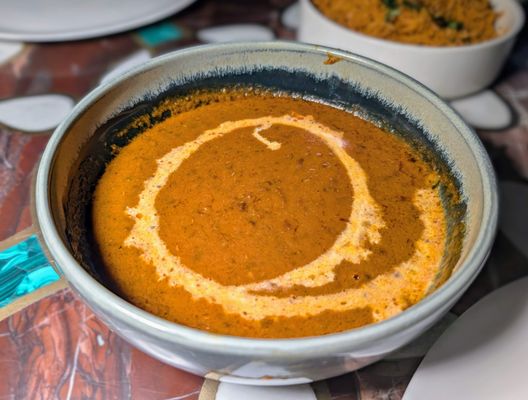
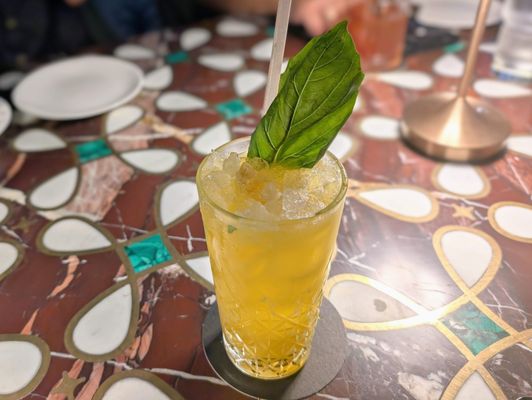
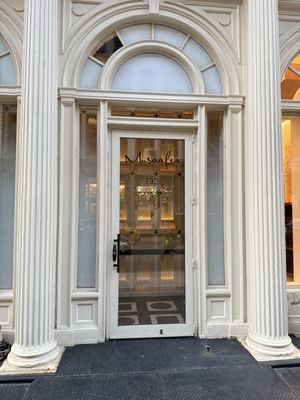
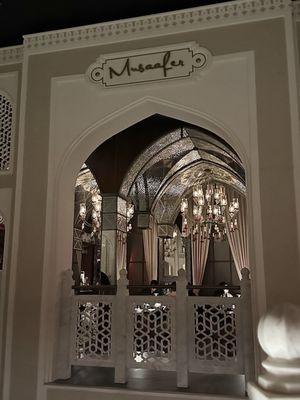
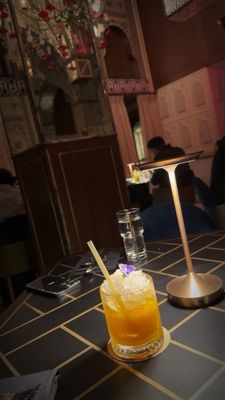
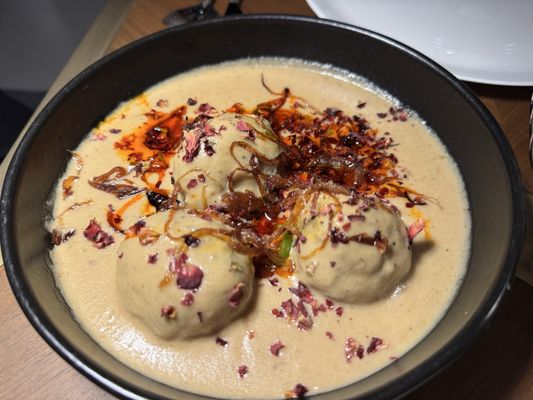
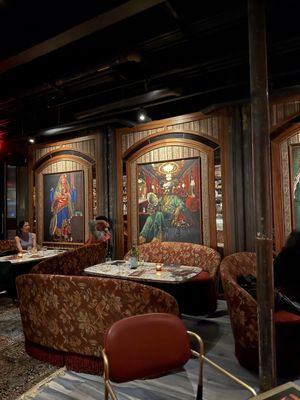
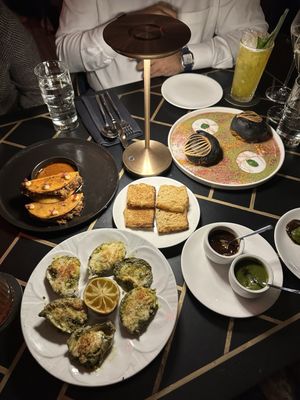
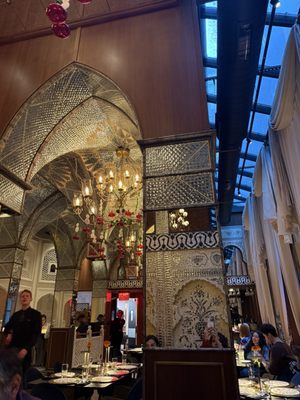
"Entering feels like you’ve wandered off a Manhattan sidewalk into an opulent Indian palace: a marble-and-fogged-glass entry leads to a golden circular host stand modeled after an Indian cooking pot with jovial animals and a round shade hiding a hunting mural, before a bright, high-ceilinged dining room with marbled tables inlaid with mother-of-pearl and minaret-like hanging lamps gives way to mirrored enclaves and side rooms inspired by the Itmad Ud Daula with geometric wallpaper and chandeliers that resemble Indian wedding jewelry with red and green glass lotus flowers. From Houston co-owners Mithu and Shammi Malik and executive chef Mayank Istwal, the menu “travels” India’s regions—built from two years of learning with families and sourcing single-origin ingredients like hand-pressed kokum extract—and pairs fine-dining polish with storytelling service. Highlights include cod with Khasi black sesame and white miso over ginger congee nodding to Meghalaya’s Chinese influences ($46), an American-wagyu beef vindaloo ($80), vegan ceviche of cured lychees with house-made tutti frutti ($22), black pakoda (onion-and-potato fritters) under a black garlic emulsion ($26), and a $42 butter chicken experience with both a tomatillo-green version and the classic reddish-orange tomato. Desserts arrive as intricate sculptures—the mishti doi is a landscape of yogurt shaped like mushrooms atop pistachio “soil”—and drinks run from Indian wines to a Negroni with Campari sous vided with paan. Set inside Tribeca’s landmarked Hope Building with vaulted ceilings and a marble facade, the 10,000-square-foot, two-level space seats 144 and includes a Sheesh Mahal clad in hand-cut mirrors (brighter here, with a silver theme, seating 42), with a basement bar, Saaqi, and a chef’s studio to come; staff are extensively trained to connect the story behind every ingredient and live the Sanskrit ethos “Atithi Devo Bhava,” making the experience as transportive as the room." - Nadia Chaudhury