8
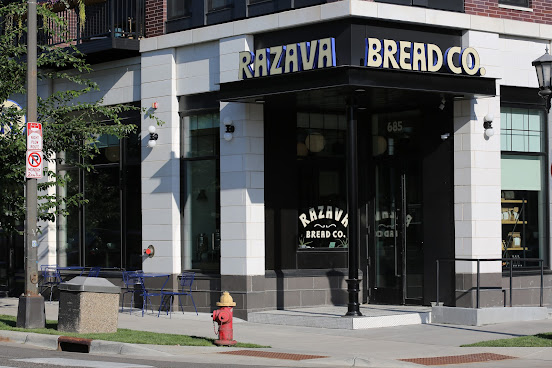
Razava Bread Co.

An ‘Old-World’ Sourdough Showstopper Lands on Grand Avenue | Eater Twin Cities
"A soon-to-open, full-scale bakery led by Omri Zin-Tamir with capacity for up to 600 loaves a day and a commercial setup built for time-managed fermentation and high-heat baking: the back wall is outfitted with four taps feeding four separate fermentation chambers, there’s a hulking European-style mixer for precise water and temperature control, a high-heat open-flame oven that reaches 800–900 degrees for rustic, crustier breads, and a double-decker convection oven as the bakery’s “workhorse.” The program spans hearty, high-extraction house loaves and tangy San Francisco–style white sourdough to pizza crusts, pita, challah and — eventually — bagels (a hybrid with New York–style water content but baked in high heat like Montreal–style bagels), plus dine-in breakfast, lunch and dinner dishes that treat bread as an ingredient rather than a vessel: expect shakshuka with candy-sweet tomatoes and chuma (a spicy Libyan Jewish condiment) served with a hunk of house loaf; pizza-like flatbreads layered with artichoke cream and roasted eggplant; and a baguette topped with anchovies, mayo and lemon zest, alongside coffee and wine. The venture explicitly links to a family baking legacy via an old Eastern European rye called razava — an exceptionally dark, dense rye once sold as a health food — and represents a blend of “old-world wisdom” with modern daily-bakery rigor; as Zin-Tamir puts it, “Everything in this bakery is going to be time-based and made with the old-world wisdom that the commercial baking industry has forsaken along the way.” Technically, the bakery emphasizes high-hydration dough (typically in the high 80s hydration), cold fermentation that can stretch a batch to three-and-a-half or four days from the starter’s removal from the fridge, and even a reliance on unfiltered, unaltered tap water as one of Zin-Tamir’s baking ‘secrets.’ He describes the operation as the “noisy, clunky pirate ship bakery” he’s always imagined, and jokes with his bakers: “people like their bread white, and then they put it in a toaster, so why not give it to them from the start? … It’s much better when you bake it dark. You get those amino acids, those Maillard reactions going, those caramelizations. The flavors come out, and you still have a really tender, soft crumb.” An opening is expected in early December." - Justine Jones